MANUFACTURING FACILITIES
In order to have large manufacturing capacities with advanced technology and at the same time giving prime importance to Quality Control; Bajaj Healthcare has established three API plants in Gujarat and Maharashtra.
We have a well-defined quality system including quality control checks at all steps of production, periodical internal quality audit, quality review and good documentation system.
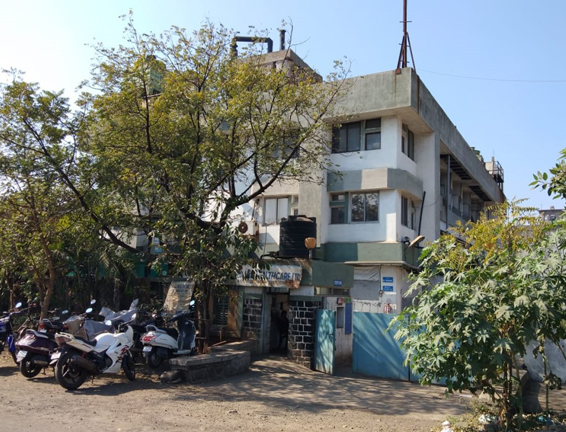
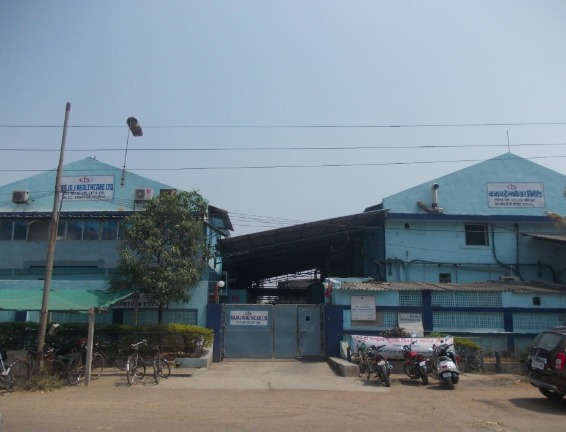
BAJAJ HEALTHCARE LTD. (UNIT NO. I)
Well-equipped plant located at Boisar, Tarapur which is about 100 km from Mumbai is established since 1993. It has all facilities under one roof to assist all production activities for API. Approvals and certifications: State-GMP certified, Written Confirmation, Halal Certification, ISO-9001:2015Understanding the Online Betting Guide UK Regulators Want New Players to Know
When the UK Gambling Commission published its revised licensing conditions in 2023, one of its stated priorities was improving what it called “consumer understanding at the point of entry.” In plain terms, regulators were concerned that a significant portion of new bettors were opening accounts and placing wagers without a working knowledge of how the industry operates, what protections exist, or what obligations fall on them as users. This is not a trivial concern. Research published by GambleAware in 2022 estimated that around 0.5% of the adult population in Great Britain — roughly 300,000 people — experience problem gambling, with a further 1.8 million classified as “at-risk.” Many of these individuals reported that they had not fully understood the products they were using when they first started. Understanding the regulatory framework, the mechanics of licensed betting, and the tools available to consumers is therefore not optional background reading. It is the foundation of responsible participation in a legal, tightly governed market.
How UK Gambling Regulation Actually Works
The UK Gambling Commission (UKGC) was established under the Gambling Act 2005 and began licensing operators in 2007. Its mandate covers three core objectives: keeping gambling crime-free, ensuring it is conducted fairly and openly, and protecting children and vulnerable people. Every operator legally permitted to offer betting services to UK residents — whether based domestically or overseas — must hold a UKGC operating licence. This is non-negotiable. Offshore operators who accept UK customers without a licence are breaking the law, and consumers who use unlicensed sites have no legal recourse if something goes wrong.
Licensed operators are subject to a detailed set of Licence Conditions and Codes of Practice (LCCP). These are updated periodically and cover everything from how bonuses must be communicated to how quickly withdrawals must be processed. In 2019, the UKGC introduced significant changes to online slots, including a ban on features that sped up play or gave the illusion of a near-miss. In 2023, further rules came into force requiring operators to conduct financial vulnerability checks on customers who deposit more than £125 in a rolling 30-day period. These are not industry self-regulations — they are enforceable conditions, and operators who breach them face fines, licence suspensions, or revocations. Between 2019 and 2023, the UKGC issued over £150 million in regulatory settlements against operators for various compliance failures.
Alongside the UKGC, the Advertising Standards Authority (ASA) governs how betting products can be marketed. The CAP Code, which the ASA enforces, prohibits betting advertisements from appealing to under-18s, from implying that gambling can solve financial problems, or from presenting it as a way to achieve social success. New rules introduced in 2022 also restricted the use of celebrities and sports stars who are particularly popular with young audiences in gambling advertising.
What New Bettors Need to Understand Before Placing a Wager
The mechanics of sports betting are more complex than they appear on the surface, and misunderstanding them is one of the most common reasons new bettors lose money faster than they expect. Odds — whether displayed in fractional, decimal, or American format — represent implied probability plus the operator’s margin. A decimal odd of 2.0 implies a 50% chance of an event occurring, but in practice, the true probability the bookmaker has priced into that market is lower, because the book is built with a margin (often called the “overround” or “vig”) that ensures the operator profits regardless of the outcome. On a standard two-outcome market, this margin typically ranges from 4% to 8% for major events, and can exceed 15% on more obscure markets.
This is why referring to a structured online betting guide UK consumers can rely on is genuinely useful for newcomers — not to find promotional offers, but to understand the structural mechanics of how markets are priced, how accumulators compound risk, and how in-play betting differs in its risk profile from pre-match wagering. Accumulators, for instance, are heavily marketed by operators because they carry the highest margins. A five-fold accumulator on football matches might appear to offer life-changing returns, but the probability of all five selections winning — even if each individual selection is priced at even money — is approximately 3.1%. The appeal is understandable; the statistical reality is less so.
New bettors should also understand the distinction between exchange betting and traditional bookmaker betting. On a betting exchange like Betfair, customers bet against each other rather than against the house. The exchange takes a commission on winnings (typically 2–5%) rather than building a margin into the odds. This means odds on exchanges are often more favourable, but the model requires liquidity — enough opposing bets to match your stake — which can be a limitation on less popular events or at unusual stake sizes.
Responsible Gambling Tools and Consumer Protections
Since 2020, all UKGC-licensed operators have been required to integrate with GAMSTOP, the national self-exclusion scheme. A customer who registers with GAMSTOP can exclude themselves from all licensed online gambling sites in the UK for a minimum of six months, one year, or five years. The scheme is free, and once activated, it cannot be reversed before the chosen period ends. As of 2023, GAMSTOP had over 400,000 registered users, and operators are required to check new registrations against the GAMSTOP database before allowing accounts to be opened.
Beyond self-exclusion, licensed operators must offer deposit limits, loss limits, session time limits, and reality checks — notifications that remind players how long they have been active and how much they have wagered. These tools are not buried in settings pages; UKGC rules require them to be accessible and easy to use. Operators are also required to monitor customer behaviour for signs of problem gambling and to interact with customers who display risk indicators, such as chasing losses, rapidly increasing stakes, or gambling at unusual hours.
The Financial Services Compensation Scheme does not cover gambling losses — this is a common misconception. However, the UKGC does require operators to hold customer funds in a way that protects them in the event of insolvency. Operators are categorised as offering “basic,” “medium,” or “high” levels of fund protection, and this information must be displayed on their websites. High-level protection means funds are held in a separate trust account, while basic protection means customer funds are held with general company assets and may not be fully recoverable if the operator goes under. Checking this classification before depositing is a step many new users overlook.
Dispute resolution is another area where consumer rights are clearly defined. If a customer has a complaint that an operator has not resolved satisfactorily, they have the right to escalate it to an Alternative Dispute Resolution (ADR) provider approved by the UKGC. The operator is bound by the ADR’s decision. This process is free to the consumer and provides a meaningful avenue of redress that does not require legal action. Knowing this process exists — and knowing that licensed operators are legally obligated to participate in it — significantly changes the balance of power between an individual bettor and a large commercial operator.
The UK’s approach to gambling regulation is among the most developed in the world, but its effectiveness depends substantially on consumers being informed participants rather than passive ones. Regulators can mandate tools, enforce conditions, and sanction operators, but they cannot substitute for a bettor who understands the odds against them, knows how to set meaningful limits, and is aware of where to turn when something goes wrong. The gap between what regulation provides and what consumers actually use remains wide, and closing it starts with education rather than enforcement.
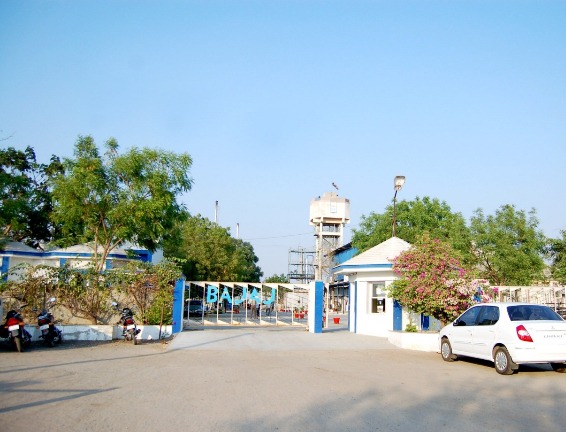
BAJAJ HEALTHCARE LTD. (UNIT NO. II)
In year 2006, we acquired a plant in Savli, Vadodara for setting up one of our biggest API and Intermediate manufacturing units. The facility is well-equipped and EU-GMP certified plant. It is approx. 40 km away from Vadodara city & is well connected by rail, road & air with major metropolitan cities.
Approvals and certifications: State-GMP certified, EU-GMP, WHO-GMP, Written Confirmation, BIS certificate, FSSAI, FSSC, HALAL certified, Star-K and OK-Kosher certified, ISO-9001-2015 certified, CEP-for Chlorhexidine Gluconate solution, RSPO Certified.
BAJAJ HEALTHCARE LTD. (FORMULATION DIVISION UNIT-III)
Started in year 2008 at Manjusar, Dist. Vadodara a State-of-the-art plant designed to meet UKMHRA, TGA and US-FDA certification and to comply most stringent GMP requirement, with latest GMP equipments & with modern civil structure. We undertake manufacturing of different formulations for sale and on contract manufacturing for many reputed companies and supply as per their requirement.
Approvals and Certifications: WHO-GMP approved, FSSAI, ISO-9001-2015 certified.
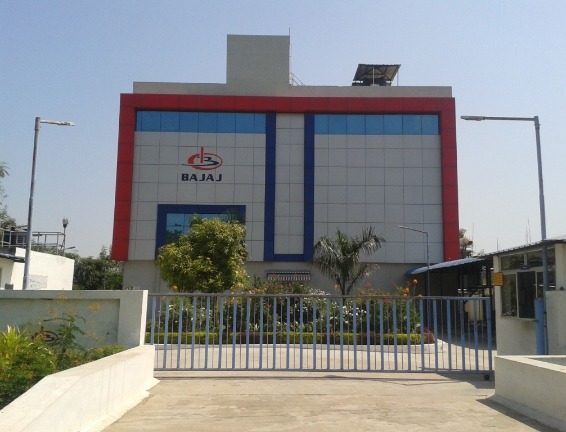
BAJAJ HEALTHCARE LTD. (UNIT NO. IV)
Another API manufacturing site located at Panoli, Ankleshwar in Gujarat was established in year 2013. The infrastructure is designed to include all amenities to support manufacturing of active pharmaceutical ingredients in compliance to the WHO-GMP requirements.
Approvals and certifications: WHO-GMP, ISO-9001-2015, Halal Certification, Star-K Kosher certified, Written Confirmation.

BAJAJ HEALTHCARE LTD. (INTERMEDIATE UNIT NO. V)
In year 2014, Intermediate plant at Boisar, Tarapur was added in the manufacturing list of Bajaj Healthcare to be self-reliant and to have backward integration of the developed APIs. Currently we are having 8 intermediates that are produced for self and commercial aspects too.